 All articles
Dark dots on the nose, small bumps on the chin, a rough forehead: anyone noticing these changes may quickly reach for an exfoliant or start squeezing their skin. But not every visible dot is a blackhead. And more thorough cleansing is not automatically the solution. What matters is what lies behind the skin's appearance.
Hydradermabrasion combines exfoliation, vacuum-assisted cleansing and moisturising care. At Studio Ginié in Heidelberg, DermaClear by Alma is used for this treatment. It can help with surface build-up of dead skin cells and blackheads. It cannot create permanently pore-free skin. [1, 4]
Why do pores become clogged?
Sebum is not dirt. The skin produces it to keep its surface supple. When sebum and dead skin cells accumulate at the opening of a hair follicle, they can form a plug: a blackhead or whitehead, medically known as a comedone. Increased sebum production, the build-up of dead skin cells and unsuitable skincare products can contribute. [2]
In open comedones, or blackheads, the plug is dark at the surface. This colour develops through oxidation on contact with air, not through poor hygiene. Closed comedones, or whiteheads, tend to appear as small skin-coloured or whitish bumps. Frequent washing or vigorous scrubbing does not address the causes and can further irritate the skin. [2]
Blackheads or sebaceous filaments: what are the dots on the nose?
Normal sebaceous filaments are often mistaken for blackheads, especially on the nose. These fine structures help transport sebum to the skin's surface. They are part of healthy skin and are not acne. [3]
Blackheads tend to stand out as individual, distinctly dark plugs. Sebaceous filaments usually appear as smaller, flat, greyish-yellow or light brown dots. However, the distinction is not always clear from looking in the mirror alone. [3]
Squeezing sebaceous filaments does not remove them permanently: sebum accumulates again. Repeated squeezing can injure the skin. A sensible goal is therefore less noticeable pores while keeping the skin intact, rather than removing every visible dot completely. [3]
Can large pores be closed permanently?
No. Pores are natural openings in the skin. How noticeable they appear depends on factors including sebum, blockages and the firmness of the surrounding skin. Cleansing and suitable care can improve their appearance. Permanently “closing” them is not a realistic treatment goal. [4]
How does hydradermabrasion with DermaClear work?
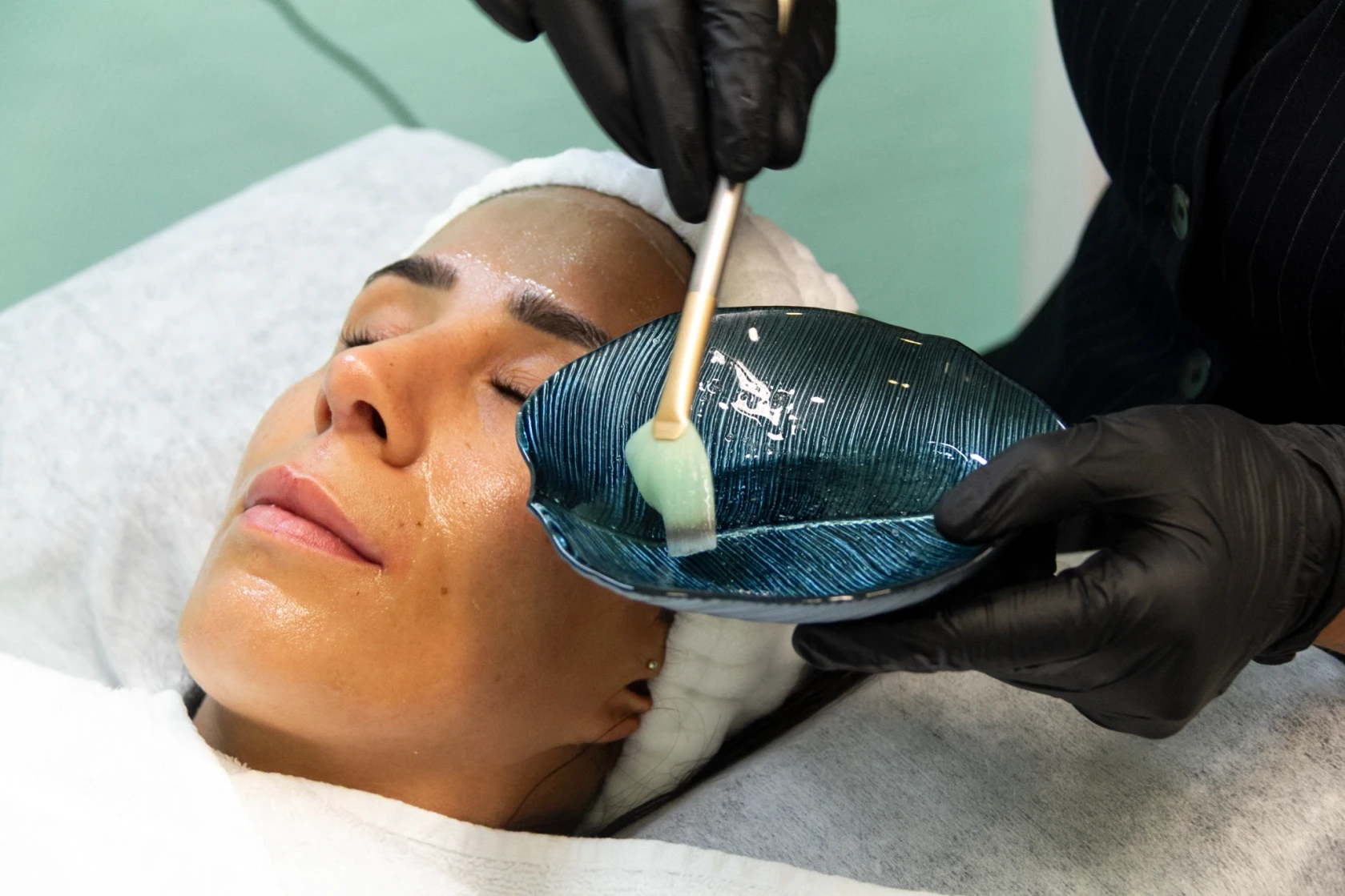
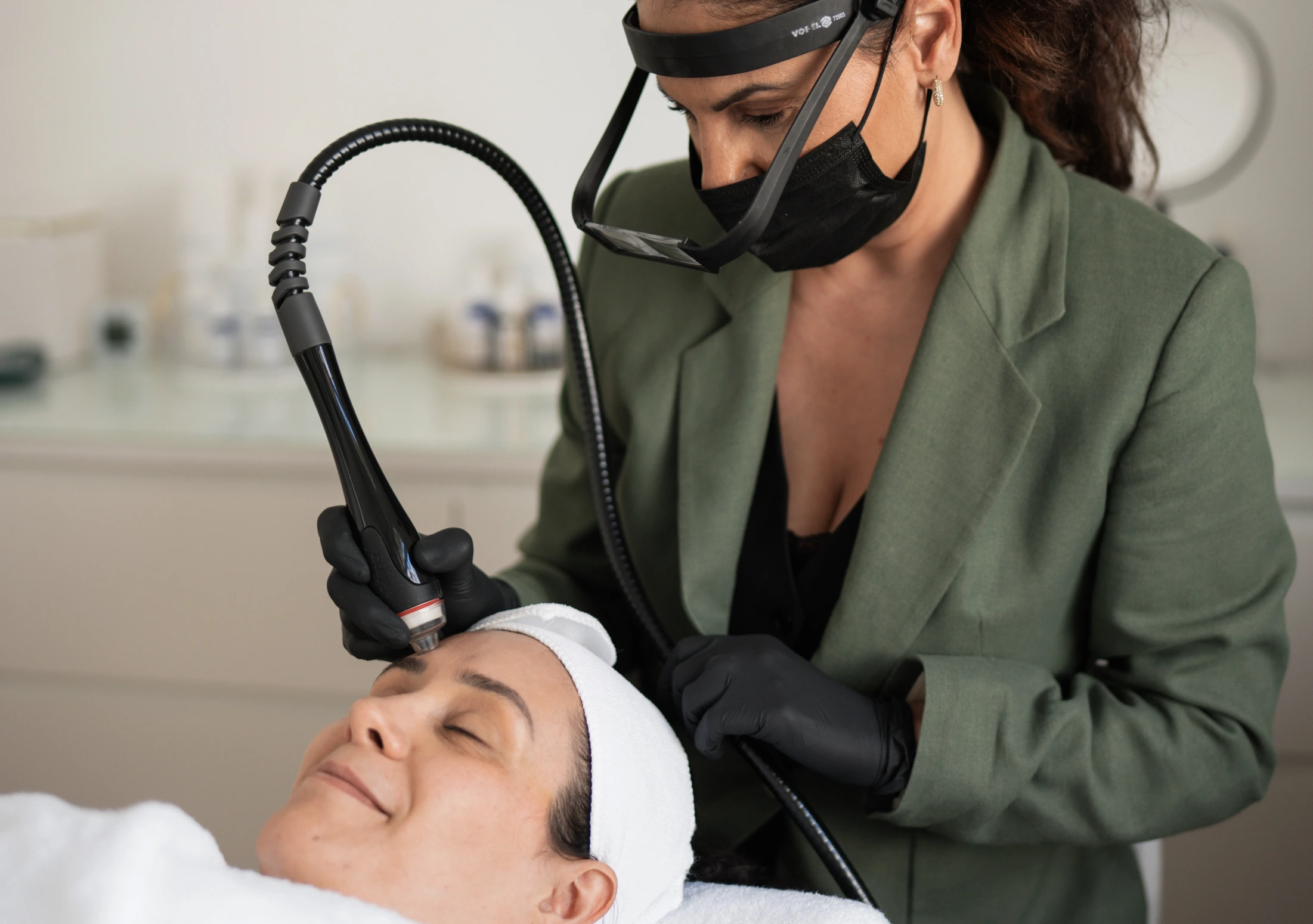
DermaClear combines specially formulated solutions with a rotating silicone tip and vacuum suction. Chemical exfoliation and mechanical action work together. “Water-based” therefore does not mean that the skin is cleansed with water alone. The process described by the manufacturer consists of three steps. [5, 6]
1. AHA exfoliation: loosening dead cells at the surface
AHA stands for alpha hydroxy acids. Examples include glycolic acid and lactic acid. In the first step, they help loosen dead skin cells. The rotating tip adds a mechanical action. This can make the skin's surface feel smoother. The intensity of exfoliation depends, among other things, on the solution used and how it is applied. [6]
2. BHA and vacuum suction: supporting cleansing
The second step uses a solution containing salicylic acid, a fat-soluble beta hydroxy acid, or BHA. Salicylic acid acts against the build-up of dead skin cells and can help with open and closed comedones. The vacuum helps remove loosened residue. [6, 7]
However, this does not mean that every firmly lodged blackhead can be completely suctioned out. For stubborn changes, targeted professional extraction or dermatological treatment may be more suitable. Stronger suction is no substitute for correctly assessing the skin. [8, 9]
3. Moisturising care: caring for the skin
Finally, a moisturising skincare solution is applied or worked into the skin with the device. This step complements cleansing. The immediate effect should be understood as skin that feels more cared for and may look smoother, rather than proof of a permanent change in skin structure. [5]
What is realistic after a treatment?
The skin may feel smoother and look more even. Surface deposits can be reduced, and cleansed pores may be less noticeable. Results depend on the initial skin condition and how well the treatment is tolerated. Sebum production and the build-up of dead skin cells continue afterwards. A single session therefore does not permanently prevent new blackheads. [2, 5]
Hydradermabrasion has been studied scientifically. A small randomised study with 20 female participants found improvements in various skin characteristics after several treatments. However, it investigated a particular procedure with an antioxidant serum, rather than a single DermaClear Basic treatment. It therefore establishes neither a guaranteed effect of this particular service nor a cure for acne. [10]
Does Hydradermabrasion Basic already include a fruit acid peel?
The DermaClear process already includes an AHA exfoliation step. The additional “Hydradermabrasion + fruit acids” package therefore should not be taken to mean that Basic is acid-free. Whether an additional treatment makes sense should depend on the skin's condition and the specific treatment goal. [1]
Who might the treatment suit?
Hydradermabrasion may be a cosmetic option when blackheads, surface build-up of dead skin cells or an uneven-looking complexion are the main concerns, provided the skin tolerates the treatment. Even with oily skin, sebum levels are not the only factor: burning, redness and flaking must be considered when choosing a treatment. [1, 4]
Treatment should initially be avoided in cases of sunburn, broken skin or active inflammation. Rosacea, marked sensitivity or visibly dilated small blood vessels call for particular caution with acids and vacuum suction. If there is uncertainty, a dermatological assessment is sensible. [1, 9]
Inform the studio in advance about skin conditions, intolerances, medication and recent treatments. In particular, current or recent isotretinoin treatment should be discussed with a doctor before an abrasive procedure. Do not stop medication on your own. [11]
What matters for skincare afterwards?
Redness or irritation can occur even after a treatment that feels gentle. Persistent or worsening symptoms should be assessed by a doctor. The following principles apply to aftercare: [1, 11]
- Cleanse gently. Use lukewarm water and a well-tolerated cleanser. Avoid rubbing and cleansing brushes. [4]
- Continue moisturising. Choose suitable skincare, preferably labelled non-comedogenic. This label offers guidance towards products intended to be less likely to clog pores. [3, 4]
- Do not exfoliate again straight away. Resume additional acids, physical exfoliation and potentially irritating active products only in line with agreed aftercare advice. Discuss prescription skin treatments with the prescribing medical practice. [1, 11]
- Take UV protection seriously. During the day, use a broad-spectrum sunscreen with at least SPF 30 and avoid intense sun exposure and tanning beds. AHAs can increase sun sensitivity; the FDA notes that this effect may persist for around a week after stopping products containing these ingredients. [4, 12]
Is an at-home pore vacuum comparable?
A simple pore vacuum works primarily through suction. It lacks the coordinated combination of exfoliating solutions, liquid and professional skin assessment. At-home devices can, at best, remove blackheads that have already loosened. Suction that is too strong or applied for too long can cause bruising, irritation and visible damage to small blood vessels. Treatment intensity must also suit the skin in a studio. [9]
How often does hydradermabrasion make sense?
A fixed schedule is not suitable for every skin type. Alma gives three to four weeks as a possible interval for regular treatments. This is a manufacturer's recommendation, not a universally applicable medical guideline. Whether to repeat a treatment depends on the skin's condition, response and skincare needs. [5]
Hydradermabrasion in Heidelberg: choosing a suitable treatment
Studio Ginié in Heidelberg-Neuenheim offers hydradermabrasion with DermaClear. If you are unsure whether your skin needs device-assisted cleansing, you can discuss in advance which approach suits its condition. Information about the treatment is available on our Hydradermabrasion in Heidelberg page.
Sources and context
Research as of 7 October 2026. Numbers in square brackets refer to the sources below. Manufacturer information describes the device and is not independent evidence of effectiveness. Source 11 concerns microdermabrasion in general and is used solely for cautious guidance on preparation and aftercare.
- Studio Ginié: Hydradermabrasion in Heidelberg. Treatment options and process.
- Cleveland Clinic: Clogged Pores. Causes and distinctions.
- Cleveland Clinic: Sebaceous Filaments. Normal sebaceous filaments and blackheads.
- American Academy of Dermatology: What can treat large facial pores?
- Alma: DermaClear. Technology, three steps and the manufacturer's recommended treatment interval.
- Alma Deutschland: DermaClear und Mein Schiff. Explanation of the AHA and BHA steps.
- American Academy of Dermatology: Adult acne treatment dermatologists recommend.
- Cleveland Clinic: 9 Ways To Get Rid of Blackheads. Professional extraction.
- University of Utah Health: Should You Vacuum Your Pores? 29 April 2024.
- Freedman BM. Hydradermabrasion: an innovative modality for nonablative facial rejuvenation. J Cosmet Dermatol. 2008;7:275–280. DOI: 10.1111/j.1473-2165.2008.00406.x.
- American Academy of Dermatology: Microdermabrasion: FAQs.
- US Food and Drug Administration: Alpha Hydroxy Acids. UV sensitivity.