All articles
Your face feels tight after cleansing, rough patches appear on your cheeks and your usual moisturiser no longer seems enough. Winter can change what your skin needs. Choosing a facial starts with a simple question: is your skin feeling drier than usual, or is it already irritated?
Studio Ginié in Heidelberg-Neuenheim offers classic facials and hydradermabrasion, among other treatments. What matters is which steps your skin can comfortably tolerate at the time.
Why skin can become drier in winter
Cold outdoor air and low humidity in heated rooms can contribute to dry skin. Long, hot washes and harsh cleansers can add to the problem. Skin loses water more easily and may feel rough or tight. [1]
The outermost layer of skin helps keep water in. Skin lipids contribute to this barrier. Hydration and barrier function therefore go together: a serum alone may not be enough when your skin also needs a protective moisturiser. [2, 6]
Dry, dehydrated or irritated: what is the difference?
| What you notice | What matters for skincare |
|---|---|
| Skin that is usually dry | Moisture and lipid-rich skincare may both be helpful. |
| Temporary dehydration | A shiny T-zone does not rule out a lack of moisture. Not every part of your face needs the same rich texture. |
| Stinging, obvious redness or cracks | These may indicate irritation or a skin condition. Clarify the cause before choosing an intensive treatment. |
These descriptions can overlap. They offer guidance rather than a diagnosis. Your skin’s current condition matters more than fitting it into a single skin-type category. [2, 4, 8]
Which facial may suit dry winter skin?
Classic facial: adapt the care to your skin
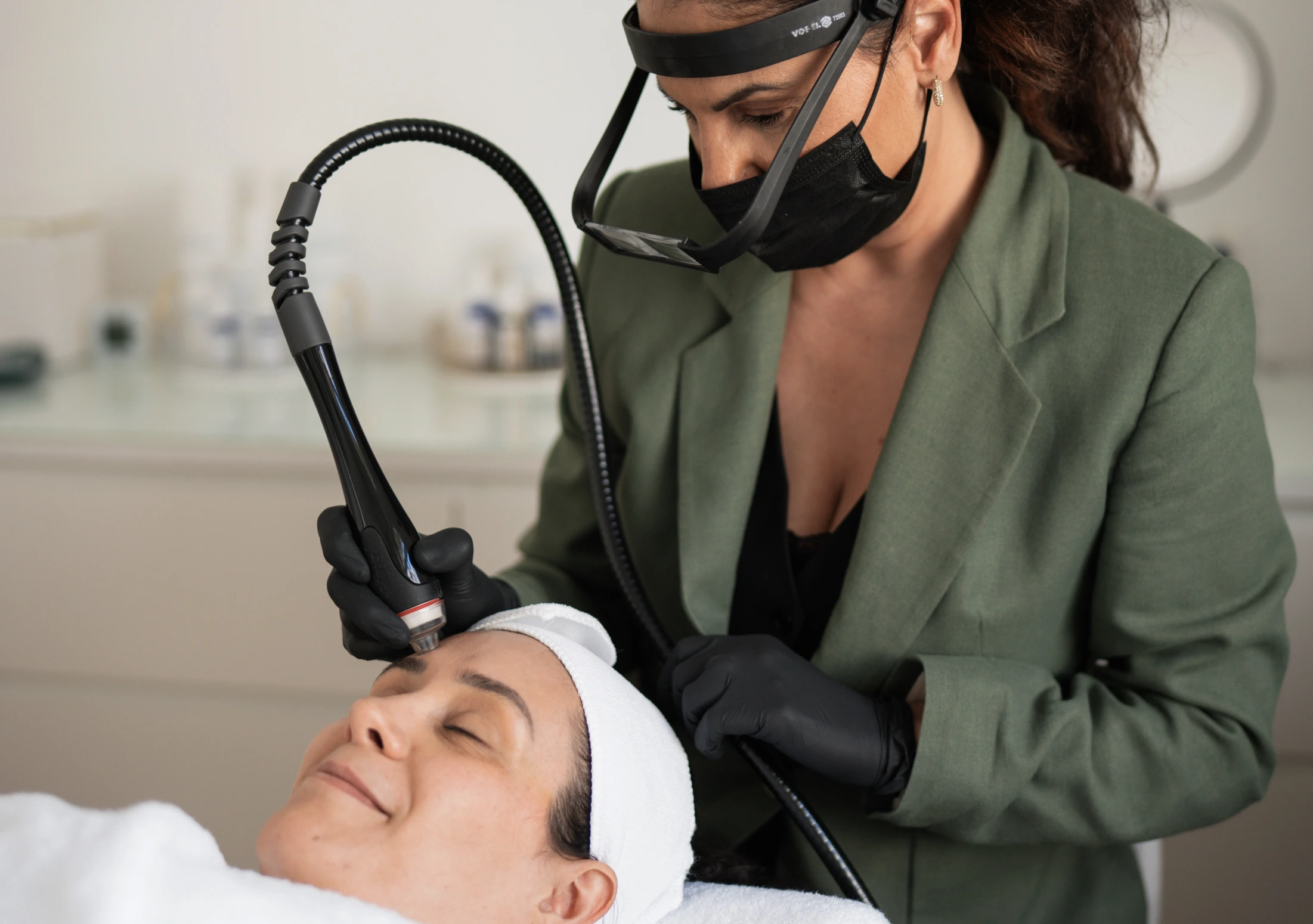
A classic facial can be a useful starting point when skin feels dry and tight without active inflammation. Studio Ginié describes a treatment that includes assessing the skin, cleansing, exfoliation, extractions, a mask and finishing care.
For winter skin, discuss whether exfoliation and extractions are appropriate at all. Gentle cleansing, a well-tolerated mask and a suitable moisturiser may take priority instead. Flaky patches do not automatically need more intensive work. [4, 5]
Hydradermabrasion: an option for dehydrated skin that tolerates exfoliation
At the studio, hydradermabrasion with DermaClear combines cleansing, AHA/BHA exfoliation, vacuum suction and moisturising care. It may be considered when clogged pores or a build-up of surface skin cells are also concerns, provided your skin can tolerate the process.
One detail matters when booking: the described DermaClear process means that Basic is not acid-free. If skin is stinging, cracked or very red, postpone this treatment initially. The word “Hydra” alone does not tell you whether a treatment is suitable right now. [9]
Research on hydradermabrasion remains limited. A small study involving eight volunteers examined short-term skin changes, rather than treatment of irritated winter skin. It does not establish a general recommendation for that skin condition or for every device. [7]
Fruit acid peels: flakes are not an automatic reason to exfoliate
A fruit acid peel may be relevant to other skincare goals. However, it is not automatically the right choice for dry, sensitive winter skin. Acids can add to existing irritation. Mention retinol, other acid products and prescribed skin treatments before a peel. Do not stop medication without advice from your prescriber. [3, 4]
What to tell the studio before your appointment
Make a note of when the tightness started, the products you use and anything that stings. Mention skin conditions, allergies or intolerances, medication and recent treatments. Photos of product packaging can help you talk through your routine. This makes it easier to discuss a suitable treatment and whether a dermatological assessment should come first. [8]
When dry skin needs a medical assessment
Severe or persistent itching, painful cracks, weeping areas and marked inflammation need medical assessment. The same applies if symptoms continue or keep returning despite changes to your skincare. Dry patches can be caused by conditions such as eczema. Cosmetic treatments do not replace diagnosis and medical treatment. [11]
Skincare between appointments
A facial complements everyday skincare. For dry winter skin, a simple routine that your skin tolerates well is a useful place to start:
| Step | How to put it into practice |
|---|---|
| Cleanse gently | Use lukewarm water and a gentle cleanser. Avoid scrubbing or repeatedly stripping oil from the skin. [1, 5] |
| Help retain moisture | Apply a suitable moisturiser while skin is still slightly damp after cleansing. Dry cheeks may benefit from a richer texture. [5, 6] |
| Choose suitable ingredients | Humectants such as glycerin or hyaluronic acid can be combined with barrier-supporting lipids such as ceramides. Tolerance of the complete formulation matters most. [4, 10] |
| Reduce irritation | Pause extra exfoliants and cleansing brushes if skin stings or flakes. Choose fragrance-free skincare where possible if your skin is sensitive. [3, 5] |
| Remember UV protection | When spending time outdoors, use a suitable broad-spectrum sunscreen with SPF 30 or higher, including in winter. Protection is especially important at altitude and around snow. [12] |
Frequently asked questions about dry winter skin
Does dry skin need moisture or oil?
Often both. Humectants and protective lipids have different roles. The most suitable texture also depends on whether some areas of your face are oily. [10]
Should I exfoliate flaky skin in winter?
Not automatically. Pause if skin stings or feels irritated. Whether a mild exfoliant is suitable later depends on your skin’s condition and tolerance. [3]
How often should I have a facial?
There is no single winter schedule for everyone. Plan further appointments around your skin’s condition, the treatment and how it responds. More frequent or intensive treatments are not automatically better.
What should I book if I am unsure?
Describe your symptoms and current skincare to the studio first. This lets you discuss the options before booking a more intensive treatment.
Find suitable care for your winter skin
At Studio Ginié in Heidelberg-Neuenheim, we discuss which facial suits your skin’s current condition. Explore the available options under treatments and prices.

Sources and further reading
- American Academy of Dermatology: Dry skin — Who gets and causes
- DermNet: Dry skin
- American Academy of Dermatology: How to safely exfoliate at home
- American Academy of Dermatology: How to pick the right moisturizer for your skin
- American Academy of Dermatology: Dermatologists’ top tips for relieving dry skin
- NHS: Emollients
- Razi S. et al. (2024): Hydradermabrasion through the lens of Line-Field Confocal Optical Coherence Tomography. Skin Research and Technology.
- American Academy of Dermatology: Dry skin — Diagnosis and treatment
- DermNet: Sensitive skin
- DermNet: Emollients and moisturisers
- NHS: Contact dermatitis
- American Academy of Dermatology: Why you need sun protection in the winter