 All articles
Your summer tan fades, but a dark spot on your cheek remains. Or your forehead looks less even after weeks of sunshine. Whether fruit acids can help depends on the type of pigmentation involved.
A superficial peel can help with certain discolourations and a rough surface. It cannot remove every type of pigmentation or replace a dermatological diagnosis. Planning therefore starts with the cause, followed by the method. [1, 3, 6]
Why pigmentation stands out after summer
UV radiation stimulates pigment production. Repeated sun exposure can contribute to lasting sunspots and darken existing pigmentation. As the surrounding tan fades, differences in tone often become more noticeable. A spot noticed in September may therefore have developed before this summer. [1, 2]
Sunspot, post-blemish mark or melasma?
| Skin change | Typical characteristics |
|---|---|
| Sunspots | Usually flat, clearly defined brownish spots on frequently sun-exposed areas. They may remain after summer. [1] |
| Brown post-blemish marks | Pigmentation following inflammation or injury, for example after a spot. These are different from indented acne scars. [2] |
| Melasma | Often larger patches of facial pigmentation on both sides of the face. Light and hormones can play a role; treatment should form part of a dermatologically guided plan. [3] |
How fruit acids affect the skin
Most fruit acids belong to the alpha hydroxy acid family, or AHAs, including glycolic and lactic acid. They encourage surface cells to shed. The intensity depends on the acid, concentration, pH and formulation, among other factors. The percentage alone says little about how a product will act on skin. [5]
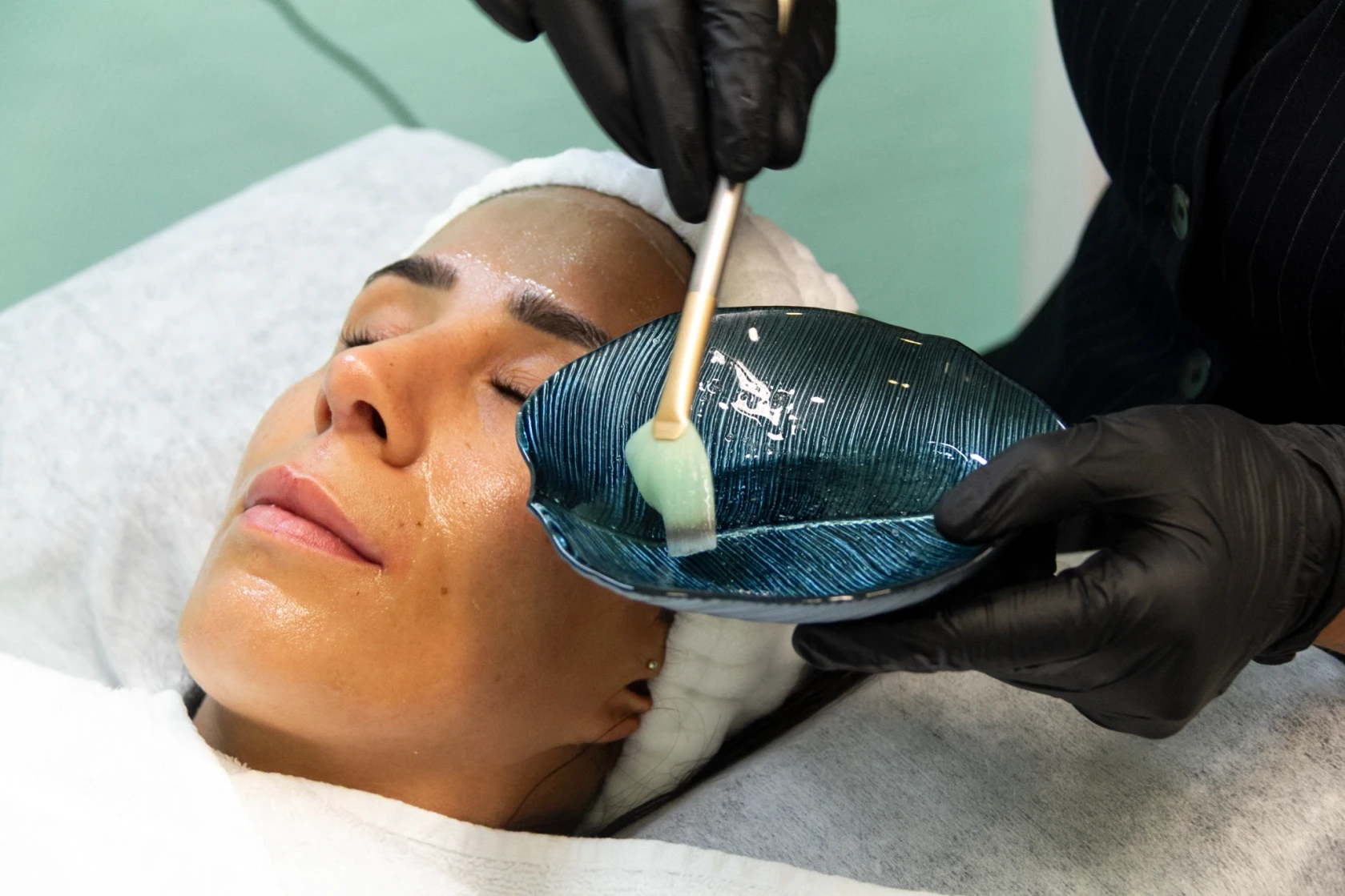
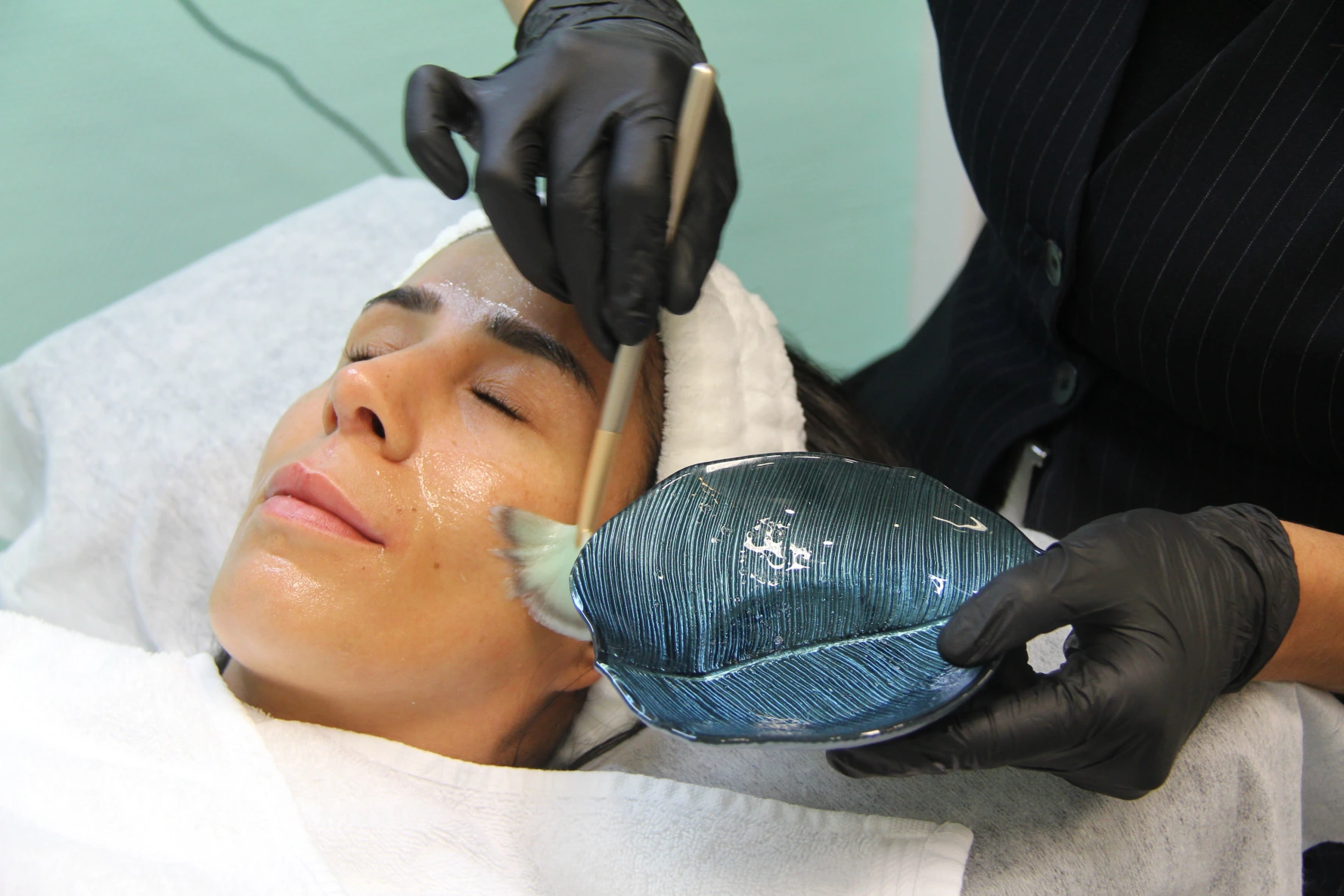
A cosmetic fruit acid peel focuses on the skin's surface. Rough, uneven areas may look smoother. For suitable superficial pigmentation, a peel can contribute to gradual lightening. Deeper pigment and continuing triggers cannot simply be removed this way. [6]
Caution is especially important with melasma. Peels may be an additional treatment but are not a universal solution. Suitability depends on pigment depth, skin type and previous reactions, among other factors. A stronger peel is not automatically better. [3, 6]
Excessive irritation can leave new dark marks. This risk particularly matters for skin prone to pigmentation after inflammation. A sensible approach prioritises tolerance rather than trying to produce as much visible peeling as possible. [2, 7]
Hydradermabrasion and fruit acids: what the combination adds
Studio Ginié in Heidelberg-Neuenheim offers fruit acids in combination with hydradermabrasion. The DermaClear system combines an AHA step, BHA cleansing with suction and subsequent hydration. Hydradermabrasion with DermaClear is therefore already an exfoliating treatment, rather than simply a moisturising mask.
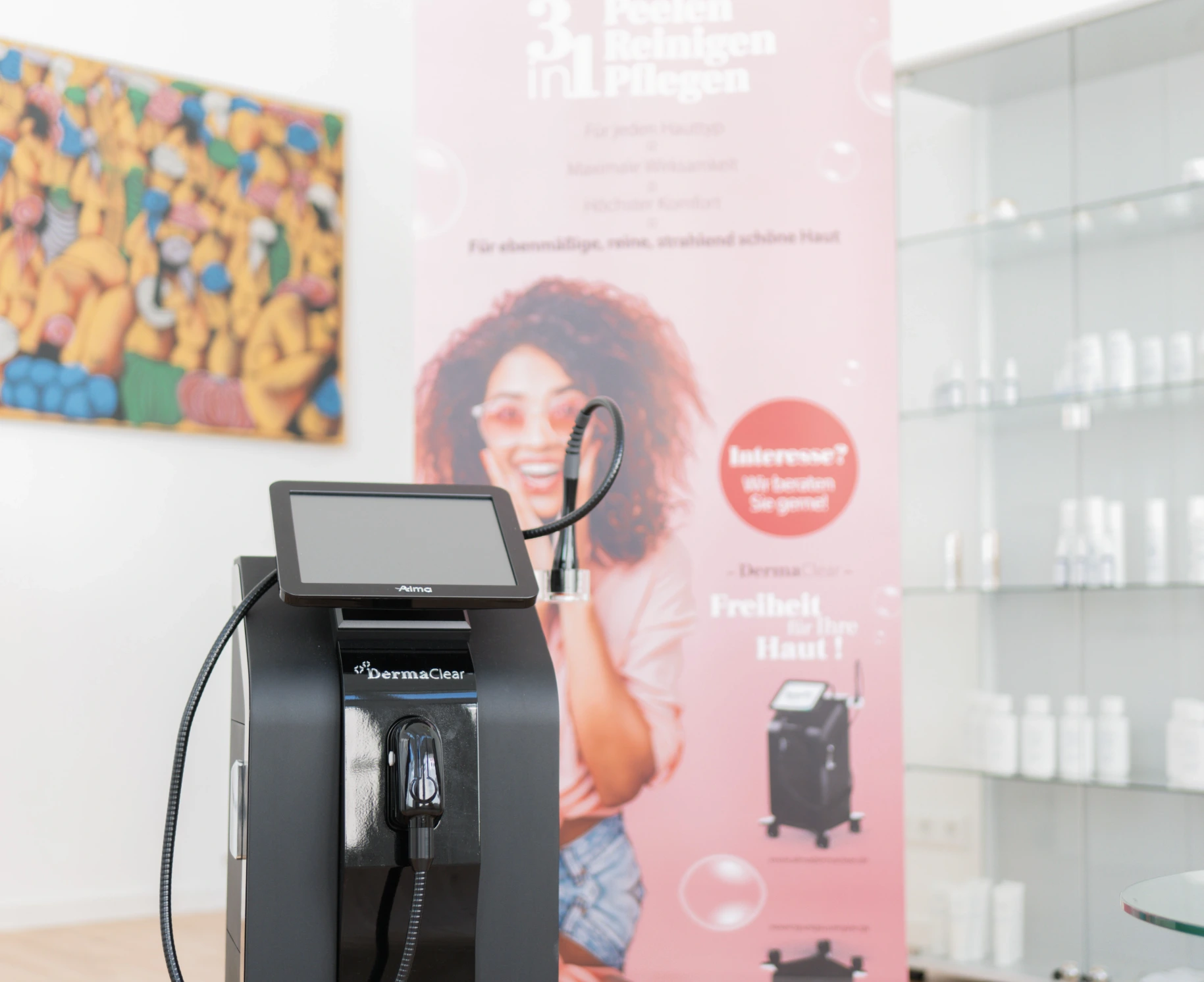
The choice depends on what accompanies the pigmentation: an uneven complexion may also have a rough surface and clogged pores. Hydradermabrasion cleanses and cares for the skin; additional fruit acids intensify surface exfoliation. The two steps must be carefully coordinated.
This combination is not an automatic add-on for every pigment spot. Sensitive or already irritated skin may benefit from less treatment. General evidence on chemical peels also does not guarantee pigmentation removal by a particular device.
Why autumn is often a suitable time
Shorter days can make planning easier if they help avoid prolonged sun exposure afterwards. But the calendar alone is not enough: a beach holiday or plenty of outdoor time still requires appropriate aftercare. Everyday exposure also adds up on the Neckarwiese or while cycling through Heidelberg.
AHAs can temporarily increase UV sensitivity. Autumn therefore does not mean sun protection can be skipped. The FDA recommends protection while using AHA products and for a week afterwards; individual aftercare instructions also apply after professional treatment. [5]
Before your appointment: discuss your skin and routine openly
Bring the names of your products and mention medications, previous peels, a tendency to cold sores and unusual skin reactions. Include any retinoids or acids used at home. Whether to pause them and for how long is decided individually; do not stop prescribed medication on your own. [8]
Sunburn, broken skin, active infections or significant irritation are reasons to postpone a peel. A classic facial can be adapted in its skincare steps, but is also only appropriate once the skin can tolerate cosmetic treatment.
After treatment: avoid triggering more pigmentation
- Use UV protection consistently. Skin prone to pigmentation benefits from high broad-spectrum UVA and UVB protection, such as SPF 50. Reapply during longer periods outdoors, and use shade and clothing. For melasma, tinted sunscreen containing iron oxides may also help protect against visible light. [2, 3]
- Simplify your routine. Cleanse gently and use the agreed moisturiser. Restart other acids, retinol and physical exfoliation only after consultation. Do not pick or rub off flaking skin. [7]
- Take reactions seriously. Mild, temporary redness or flaking may occur depending on the treatment. Seek medical advice for severe pain, blisters, pronounced swelling or worsening symptoms. [5, 7]
What results are realistic?
Visible lightening can take weeks to months, depending on the cause. The number and spacing of appointments depend on the cause, skin response and goal. No fixed number of sessions can responsibly be promised for every complexion. Photos in consistent lighting without make-up help assess changes objectively. If improvement does not occur, reassess the diagnosis rather than continually increasing intensity. [1, 3, 7]
At Studio Ginié, we discuss whether hydradermabrasion with fruit acids suits your concerns based on your skin condition. Find the treatment and process on our page about Fruit acid peels in Heidelberg. Unexplained pigmentation changes should first be assessed by a dermatologist.
Frequently asked questions about pigmentation and fruit acids
Will pigmentation disappear by itself after summer?
Do fruit acids help all types of pigmentation?
Is hydradermabrasion automatically useful for pigmentation?
No. It may suit skin that also needs cleansing, care or surface smoothing. DermaClear already includes exfoliating steps. Whether additional fruit acids make sense also depends on sensitivity and tolerance.
Sources
This medical information provides context and does not replace an individual dermatological examination.
- DermNet: Solar lentigo
- AAD: How to fade dark spots in darker skin tones
- AAD: Melasma - Diagnosis and treatment
- AAD: What to look for - ABCDEs of melanoma
- FDA: Alpha Hydroxy Acids
- Rendon MI et al. (2010): Evidence and considerations in the application of chemical peels in skin disorders and aesthetic resurfacing. J Clin Aesthet Dermatol. 3(7):32-43.
- AAD: Chemical peels - FAQs
- AAD: Chemical peels - Preparation